Protecting Your Investment: Keeping Predators (Seagulls, Foxes, Cats) Away
Protecting Your Investment: Keeping Predators (Seagulls, Foxes & Cats) Away from Your Pond
Building a beautiful pond is an investment in your garden, your home’s atmosphere, and the wellbeing of your fish. But once your pond is established, one of the most common challenges we see at RBW Ponds is the arrival of unwanted visitors—mainly seagulls, foxes, and cats. These predators are naturally attracted to ponds, especially those with bright, active fish such as koi and goldfish.
Below is our advice as a professional pond construction & cleaning company on how to keep your pond and fish safe all year round.
1. Location Matters – Start with Smart Pond Placement
The first line of defence starts before the pond is even built.
Avoid open, exposed spaces:
Predators like seagulls prefer easy access and clear sightlines. A pond placed in the middle of an open lawn is far more vulnerable than one partially sheltered by shrubs, pergolas, or planting beds.
Use natural cover:
Strategic landscaping—such as tall grasses, marginal plants, or rockeries—provides shade, reduces visibility from above, and gives fish places to retreat when they feel threatened.
Consider visibility from the house:
A pond placed within clear line-of-sight of your home’s windows makes it easier for you to spot predators early and act quickly.
2. Protecting Different Fish Types
Not all fish are equally vulnerable.
Koi
Koi are brightly coloured, slow-moving, and highly visible—making them prime targets. They often come to the surface for food, which can attract predators.
Recommended protection:
- Deeper pond sections (at least 1m)
- Strong netting during early spring and autumn
- Shelters like koi caves or tunnels
Goldfish & Shubunkins
These fish are smaller, faster and often darker in colour, making them more difficult for predators to spot.
Recommended protection:
- Dense planting areas
- Floating plants for shade
- Brushwood bundles or artificial hiding structures
Native Species (Tench, Rudd, Stickleback)
Less colourful and naturally wary, these fish typically avoid the surface—but still benefit from shaded areas and underwater cover.
3. Long-Term Predator-Proofing Solutions
Add Safe Hiding Places
Install features such as:
- Rock overhangs
- Koi tunnels
- Floating lily pads
- Marginal plants (iris, reeds, pickerel)
These provide immediate escape routes when predators approach.
Use Surface Protection
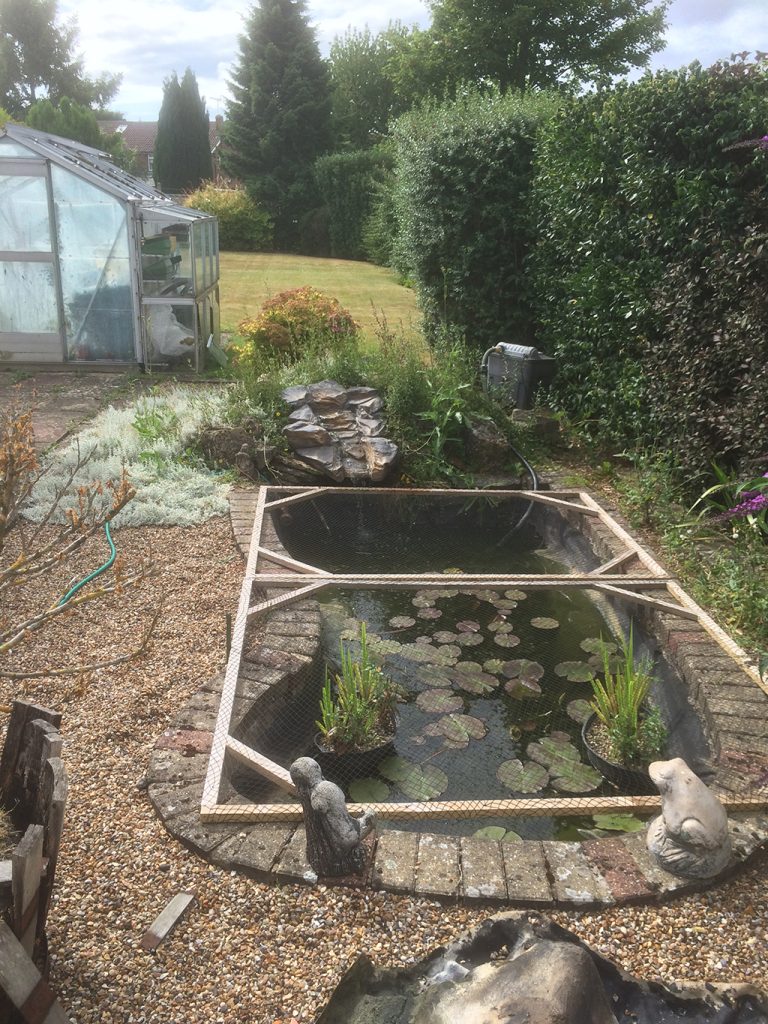
Netting – Still one of the most effective solutions when fitted properly. Choose a fine, tensioned net that prevents birds from landing or foxes from reaching through.
Pond covers or pergolas – Attractive, semi-permanent structures that limit aerial access.
Motion-activated sprinklers – Excellent for foxes and cats, as they dislike sudden movement and water.
For Seagulls:
- Install decoy birds of prey (move occasionally so predators don’t adjust).
- Use anti-landing wires or thin tension lines across the pond if netting isn’t desired.
- Reduce surface feeding—floating food draws seagulls quickly.
For Foxes:
- Avoid leaving food sources (fish food, compost, pet food) nearby.
- Install low-level motion-activated lights or sprinklers.
- Ensure pond edges are firm and not easily collapsed near fox pathways.
For Cats:
- Use cat-deterrent planting such as lavender, rue, or thorny shrubs around access points.
- Install ultrasonic cat deterrent devices.
- Ensure fish have plenty of shaded, deep hiding spots.
4. Maintenance That Keeps Predators Away
A well-maintained pond is less appealing to predators.
Clear Water = Better Fish Awareness
When fish can see predators early, they react quickly.
Regular cleaning and filtration maintenance helps keep them safe.
Avoid Overfeeding
Excess food floating at the surface acts like a dinner bell for birds and cats.
Trim Overhanging Branches
These act as perfect vantage points for cats—or landing spots for birds.
Seasonal Checks
Predators often become more active:
- After heavy rain
- In winter when food is scarce
- In spring when young predators are learning to hunt
During these times, increase monitoring and reinforce protective measures.
Conclusion
Protecting your pond from predators is not just about placing a net over the water—it’s about thoughtful design, strategic planting, and responsible maintenance. Whether you have show-quality koi or a natural wildlife pond, taking these preventative steps will keep your fish safe and your pond looking its best all year round.
If you’d like personalised advice or need help predator-proofing your pond, we’re here to help.
Contact RBW Ponds for further advice.
Email: andrewlongrbw@hotmail.com
FREE ESTIMATES and Consultation Available
We’re always happy to help you protect your investment and keep your pond thriving.
Blogs & Guides
-
Planning a Water Garden: Integrating Ponds with Your Landscape Design
-
Protecting Your Investment: Keeping Predators (Seagulls, Foxes, Cats) Away

-
Pump Power: Sizing Your Water Feature Pump Correctly
-
DIY vs. Professional Pond Installation: When to Call the Experts
-
The Root of the Problem: Troubleshooting Common Pond Algae Issues